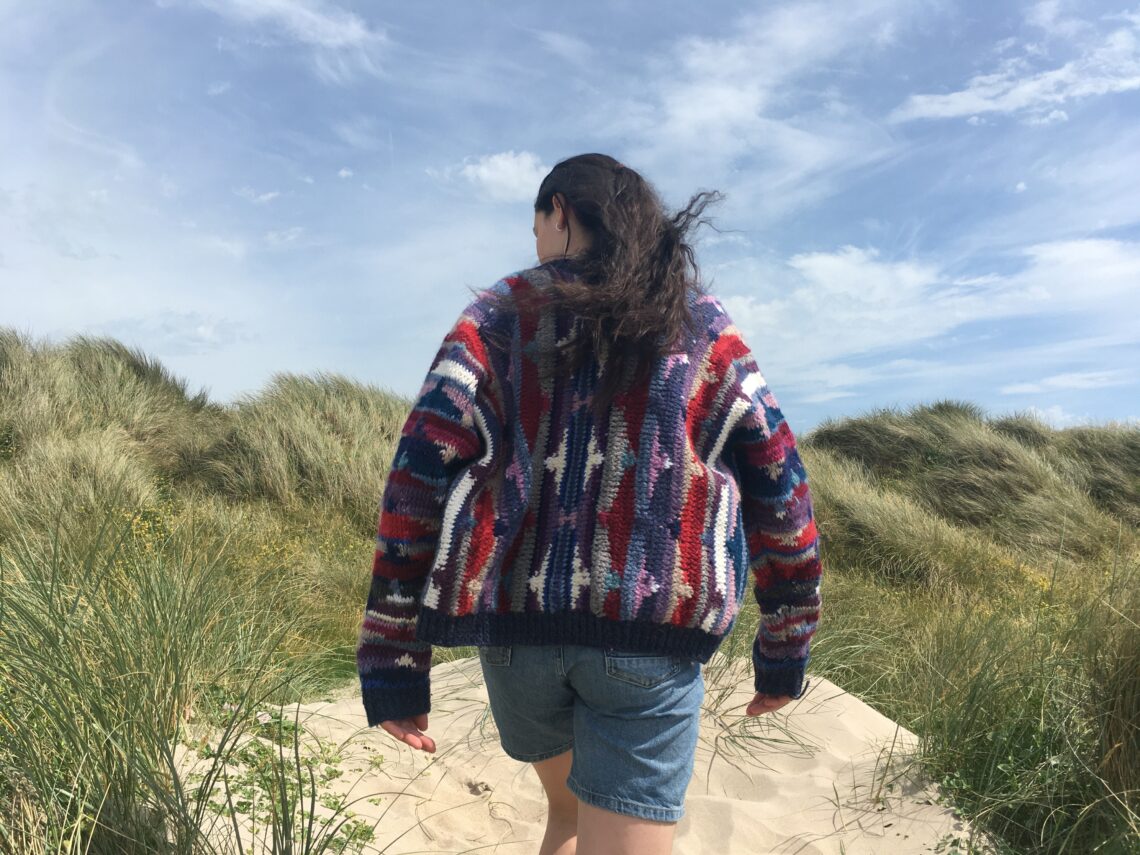
Kaffe Fassett’s “Jack’s Back Stripe” Blouson Jacket
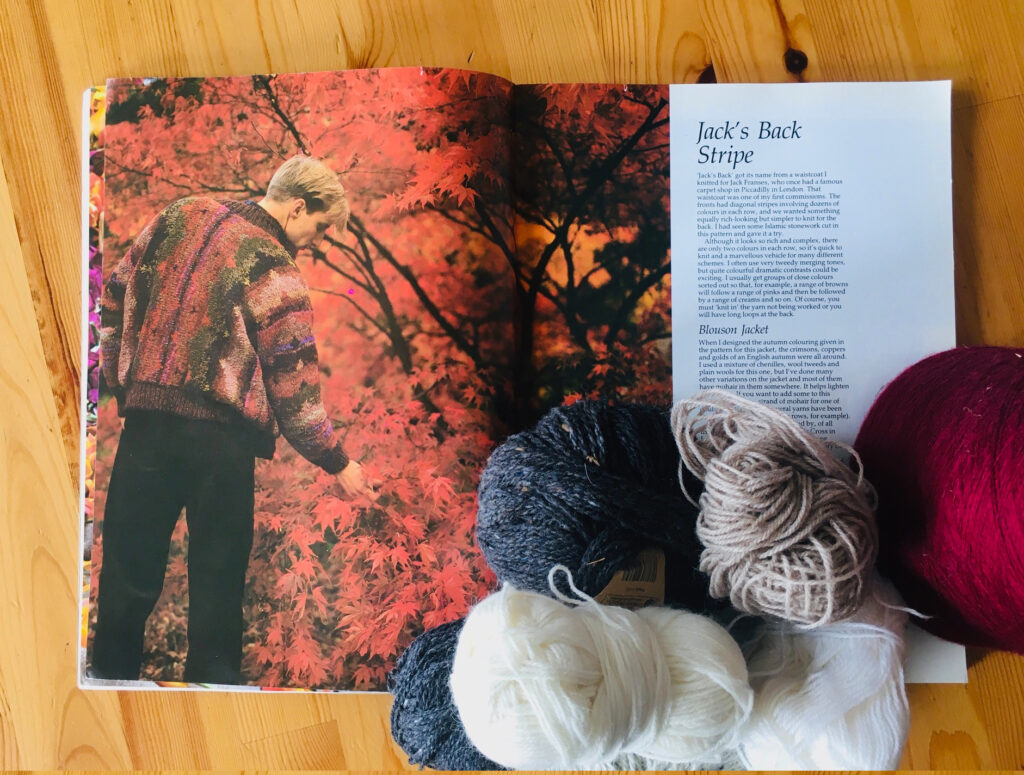
What a project! I first heard of Kaffee Fassett when I was looking for beautiful fabrics for a quilt project. I really liked the designer’s colorful fabrics and knitwear. After knitting rather understated basics for myself for several years, I was overcome with the desire for something unusual and colorful, and I came across Fassett’s book “Glorious Knits” online, a pattern book from 1985. The book was quickly ordered on eBay and the model was decided: Jacks Back Stripe, a blouson jacket with a relaxed fit and a gauge of 14 stitches per 10cm, so bulky weight.
What makes this jacket special is the elaborate colorwork, created using 24 different yarns (in varying weights) by mixing the individual yarns together in different ways. This results in many more color combinations, some with a marl effect. The jacket is therefore ideal for stashbusting, and you can practically use anything you have left over from previous projects (and which you like in terms of color combination) by simply knitting thinner yarns together with other yarns or by knitting the yarn with three strands.
The cut is suitable for men and women; it is relaxed and rather wide, and as is often the case with vintage knitting patterns, the jacket is knitted in one piece, in this case from cuff to cuff.
I had a large cone of burgundy yarn from a charity shop and leftovers from previous projects in gray, cream, and beige. What I envisioned was therefore a color combination within these color families paired with blue and green tones, somewhat in the style of Isabel Marant.
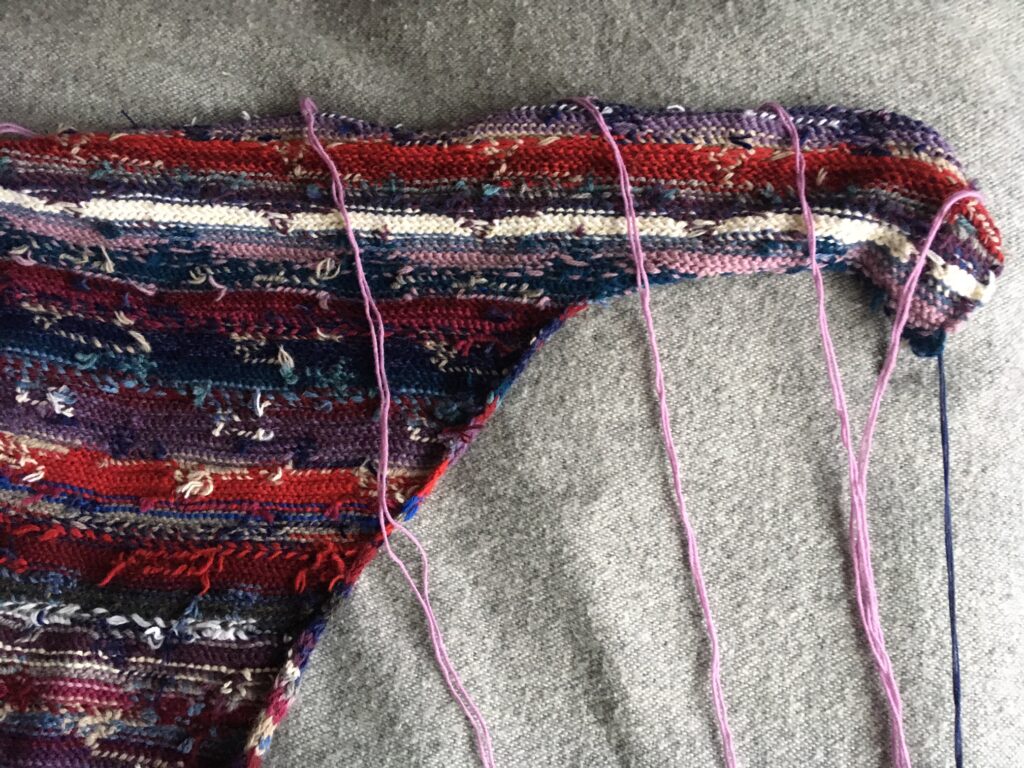
For the “Jack’s Back Stripe” jacket I ordered 30 more balls of yarn in 22 colors, mainly pink, red, purple, and shades of blue. The yarns were a mix of alpaca and wool, primarily Drops Lima, Flora, and Soft Tweed. Then I started with the first sleeve and noted down the color combinations I used so I could use the same mixes on the other side.
The bulky weight meant it progressed surprisingly quickly. The most difficult part was choosing the right colors and, of course, the stranded colorwork. To prevent the balls from tangling too much, I roughly calculated how much of each color I needed for the next rows and cut the yarn accordingly, as recommended in the book. This is particularly practical for the diamond shapes that break up the striped pattern and which I knitted in intarsia technique. This way, the color, which is only used in certain areas, doesn’t have to be carried over the entire row.
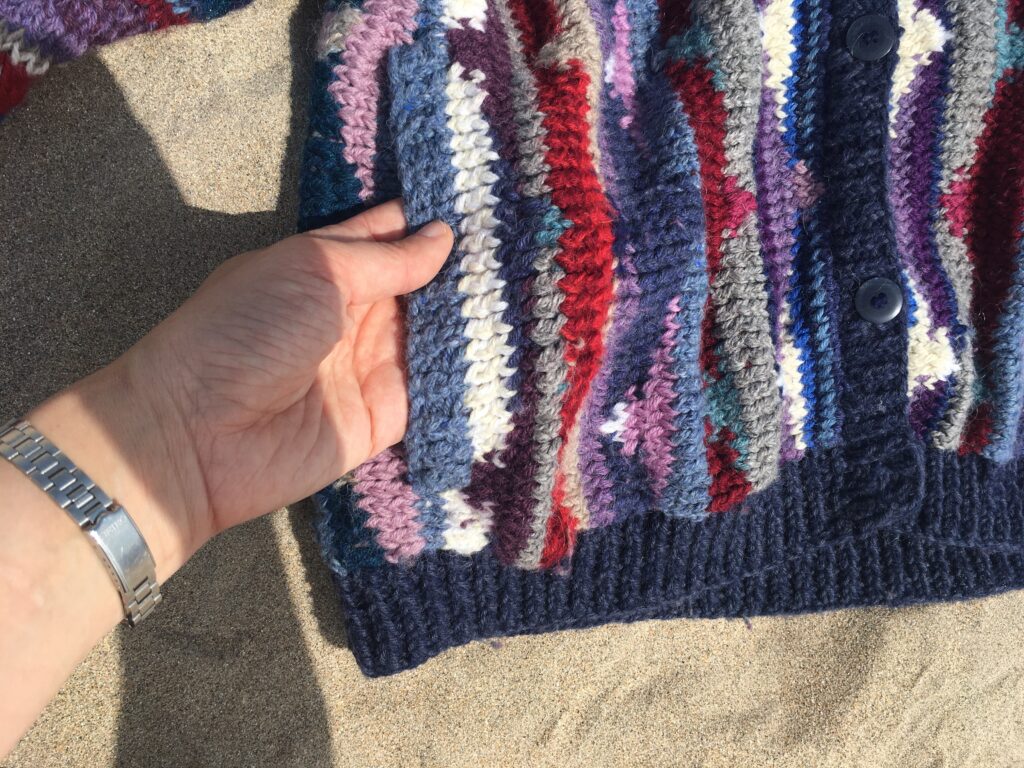
The blouson has two handwarmer pockets, which I made according to the pattern. However, the pocket linings are very small, making the pockets more decorative. I knitted slightly off gauge, with about two extra stitches per 10 cm, because I wanted the jacket to be a bit smaller than the pattern called for (there’s only one size), so that might be the reason.
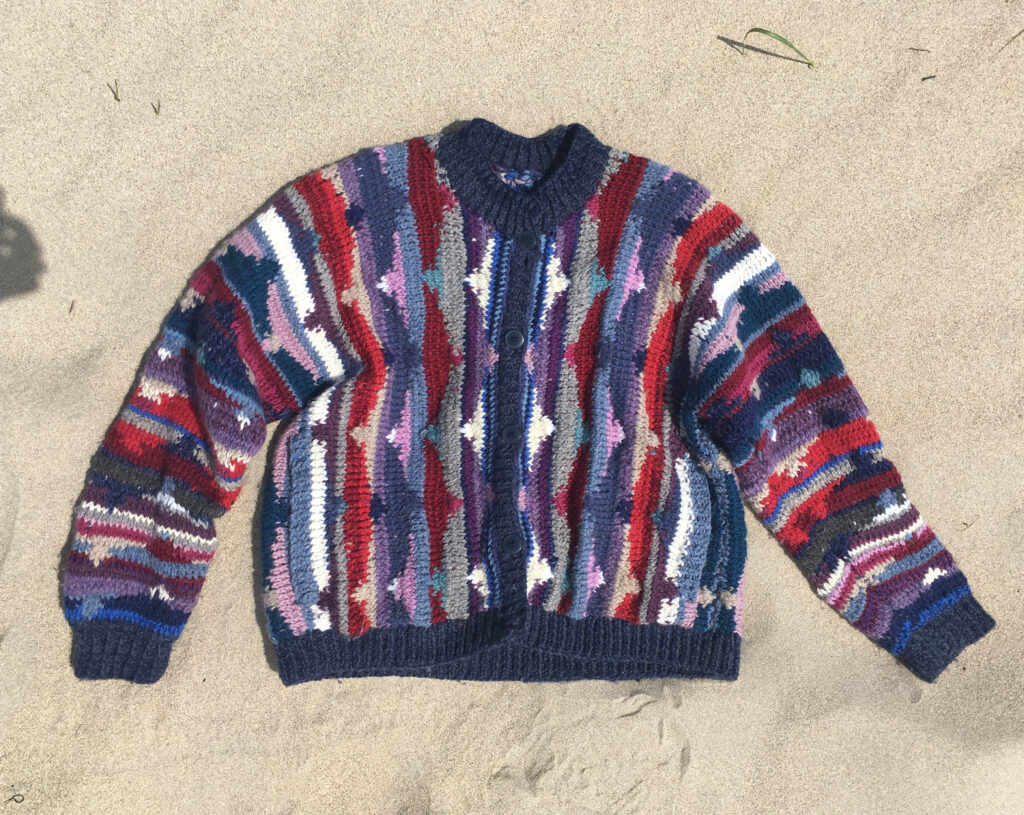
Knitting this model has absolutely addicted me, so I worked exclusively on this jacket and only needed 4 weeks to finish it.
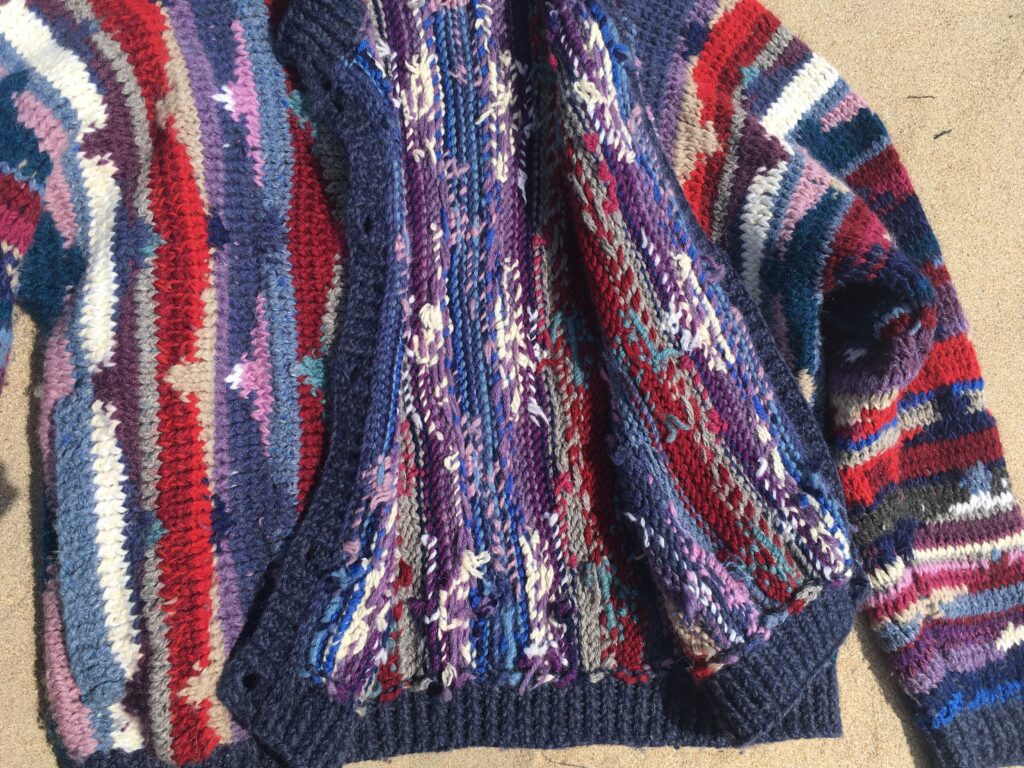
There were practically no ends to weave in after sewing the seams at the sleeves and the sides because I wove the thread into the back at all color changes, as recommended by designer Kaffe Fassett. The result looks a bit messy on the inside, but I think it’s acceptable in order to avoid having to sew in what felt like 1000 ends.
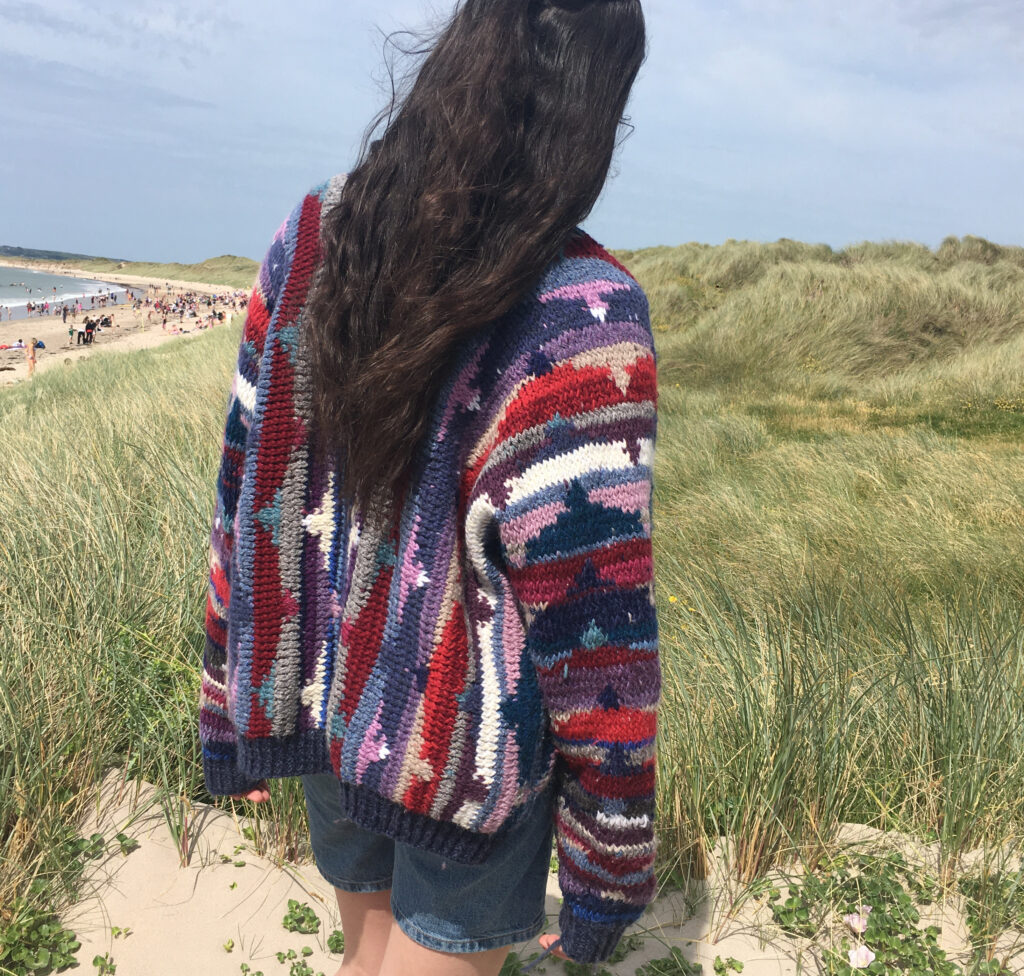
Blocking has done wonders for the jacket, and the sleeves, which were previously too short, are now even a bit too long! Overall, the jacket was a fantastic project that was incredibly fun to make – really a glorious knit to me! Unlike solid-colored garments, you can really let your creativity run wild and even co-design it. Thanks to the alpaca content, it’s incredibly warm and perfect for the depths of winter or as a coat alternative. I think it goes so well with jeans. My only regret is that I used a few “warm” colors, like the beige and brownish-gray. Next time I knit such a colorful wonder, I want to stick to warm or cool color families to achieve more harmony.
